

William Shaw was one of those kids who saw the world differently, says his mom, Susan Furfey ’00 Shaw. “When William was 8, his class was learning about the Jewish New Year. Each child was asked to choose a mantra for the year ahead, and William wrote simply: ‘Be yourself.’
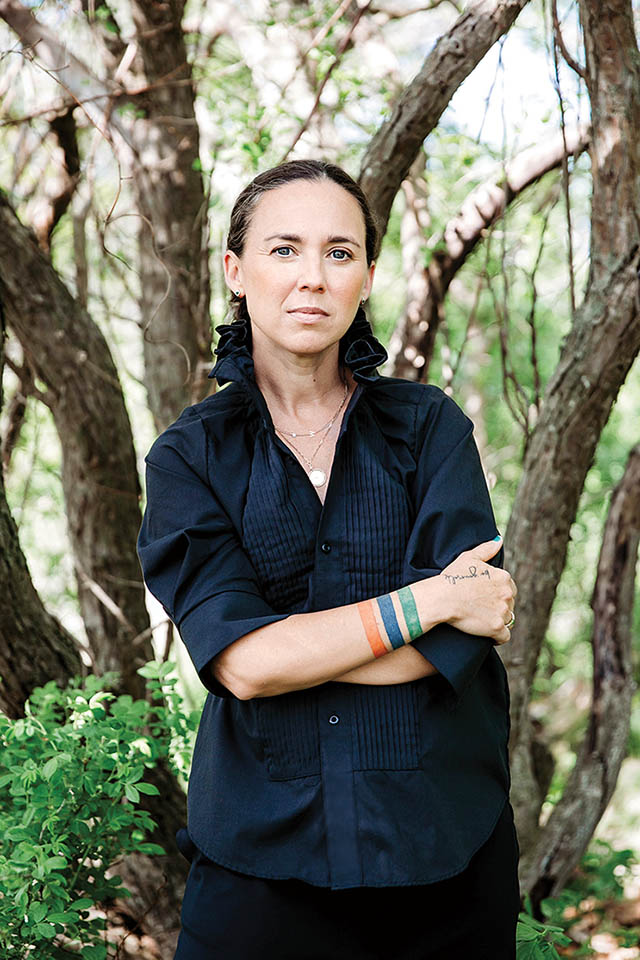
“It was something he was striving to live by in his own life — figuring out who he was and embracing that fully. He was deeply kind, wildly imaginative, and incredibly thoughtful for someone so young. People were drawn to him.”
In February 2019, when William was 9, he died in a skiing accident.
“His teacher gave us the notecard with his handwriting, and it became a guiding light in our grief and the name of the organization we created in his honor,” Shaw says.
That all-volunteer nonprofit organization, William’s Be Yourself Challenge (WBYC), was brought to life by Shaw and her husband, Nick, along with a group of moms in their hometown, Carlisle, Mass.
“A few years after William died, his peers were still struggling, and there were no support services for kids grieving a friend,” Shaw says. Together, parents and their kids organized the first WBYC event, William’s Flatbrimmed Parkour Challenge, for grieving children.
“Parkour was William’s second-favorite sport. He was adventurous from the very beginning. He was athletic and coordinated, with a love for movement — skiing, scaling trees, and mastering backyard parkour. He was also known for his collection of flat- brimmed hats.”
The annual Parkour Challenge is “more than just an event — it’s a mindset. Being yourself isn’t always easy,” says Shaw. “It gives kids agency over their grief and allows them to take their feelings and channel them into movement, creativity, and service.”
Honoring William’s legacy, WBYC has mushroomed into a full-time endeavor for the Shaws, who are also parents to 13-year-old Kai and 4-year-old Bodhi.
WBYC hosts the Parkour Challenge, an educational lecture, and a remembrance event near William’s December birthday. Their website, williamsbeyourselfchallenge.org, provides guidance and resources to grieving families and the friends who want to comfort them. Evident throughout the organization’s work is the understanding that grief is processed differently by siblings and friends than it is by parents.
“When a child dies, the world as you knew it ends. Nothing feels safe or familiar anymore,” says Shaw. “For parents, it’s a grief that lives in the body, an aching exhaustion like nothing else. If you have other children, you somehow have to keep moving forward for them, even when you feel like you can barely breathe. You’re forced to parent through unimaginable pain.”
For brothers and sisters in a grieving family, she adds, “siblings may struggle in silence. They’re often overlooked in the grief, but they carry so much confusion, anger, sadness, and, sometimes, guilt. Their friends may not know how to show up, and that isolation can deepen the pain.”
At Colgate, Shaw earned a bachelor’s degree in art history (her brother, John Furfey ’98, was also a student) and then earned a master’s in interior design from Suffolk University. She worked at the Museum of Modern Art, the Los Angeles County Museum of Art, and an architecture firm before becoming a full-time mom after William’s birth.
Voted the Best Art and Art History Student, Shaw says, “Colgate instilled in me a deep sense of purpose, hard work, and passion, and it shaped how I approach life and work even now.
“That same spirit of ‘leaning in’ guides me in my grief work,” adds Shaw, who has committed herself to learning about grief through taking courses, attending support groups, and speaking openly about loss.
She’s currently developing a new endeavor for WBYC: The Green House, a retreat space where grieving families can stay free of charge to “find rest, connection, and comfort.” Green was William’s favorite color.
WBYC is conducting a $2 million capital campaign to purchase a single-family home in Falmouth, Mass., and the goal is to host one grieving family each week year-round.
“It will be a cozy, nurturing home nestled in nature with green-toned rooms, peaceful outdoor spaces, creative activities for kids, and gentle, informal support for families,” says Shaw.
“The world doesn’t stop, and neither do the everyday demands of life, but grief needs room. Our hope is to make it easier for families to take a break — physically and emotionally — without needing to plan every detail or explain their pain.”
There’s no shortcut through grief, she emphasizes. “You have to spend time in the pain, give it space, and do the hard emotional work to begin restoring. Over time, and often with the right support, you can start to see joy again.”